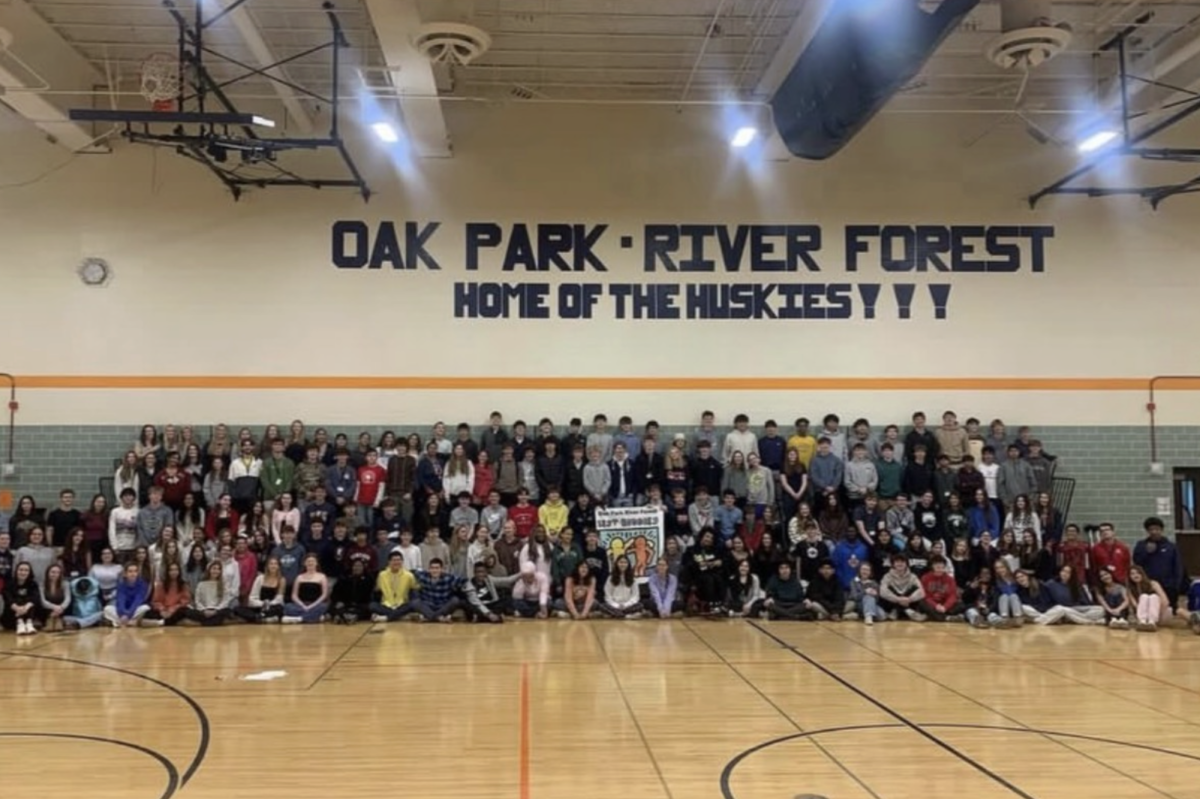
For some at Oak Park and River Forest High School, getting through the day without enough to eat is a reality that goes unnoticed.
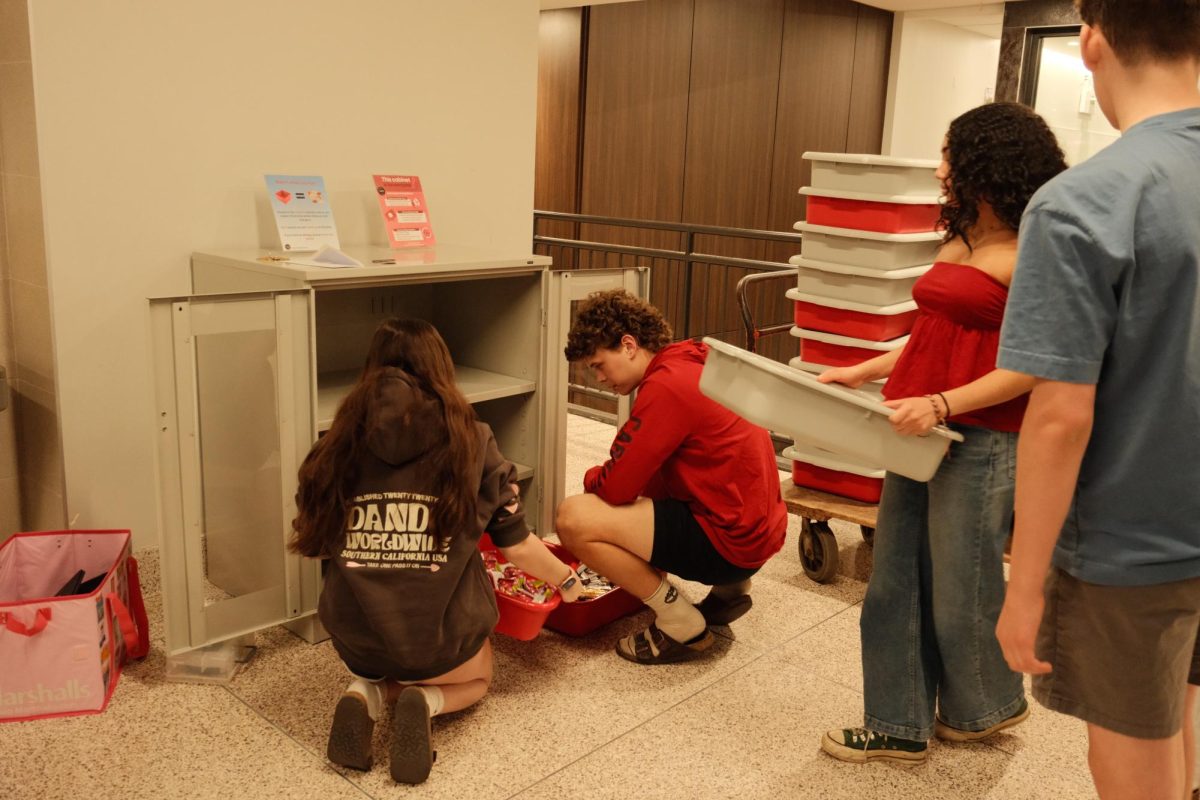
Students Feeding Students, an organization formed this school year, is working to change that through a plan to install food cabinets across the building – accessible spaces stocked with snacks that anyone can take during the school day. Four cabinets were installed May 11 and stocked with snacks May 12.
“There are students who don’t fall under free or reduced lunch, but still can’t really afford food,” said Lucy Adams, an OPRF student and member of the group behind the proposal. “We say it’s kind of an invisible need.”
According to the National Center for Education Statistics, 598 of OPRF’s 3,307 students qualified for free or reduced lunch during the 2024-2025 school year, the most recent year for which data were available. Separately, the 2025 Illinois Report Card reports that about 18% of students at OPRF were classified as low-income.
Students Feeding Students said food insecurity likely affects even more students, including some who fall just outside the income requirements for assistance but still struggle to consistently afford meals during the school day.
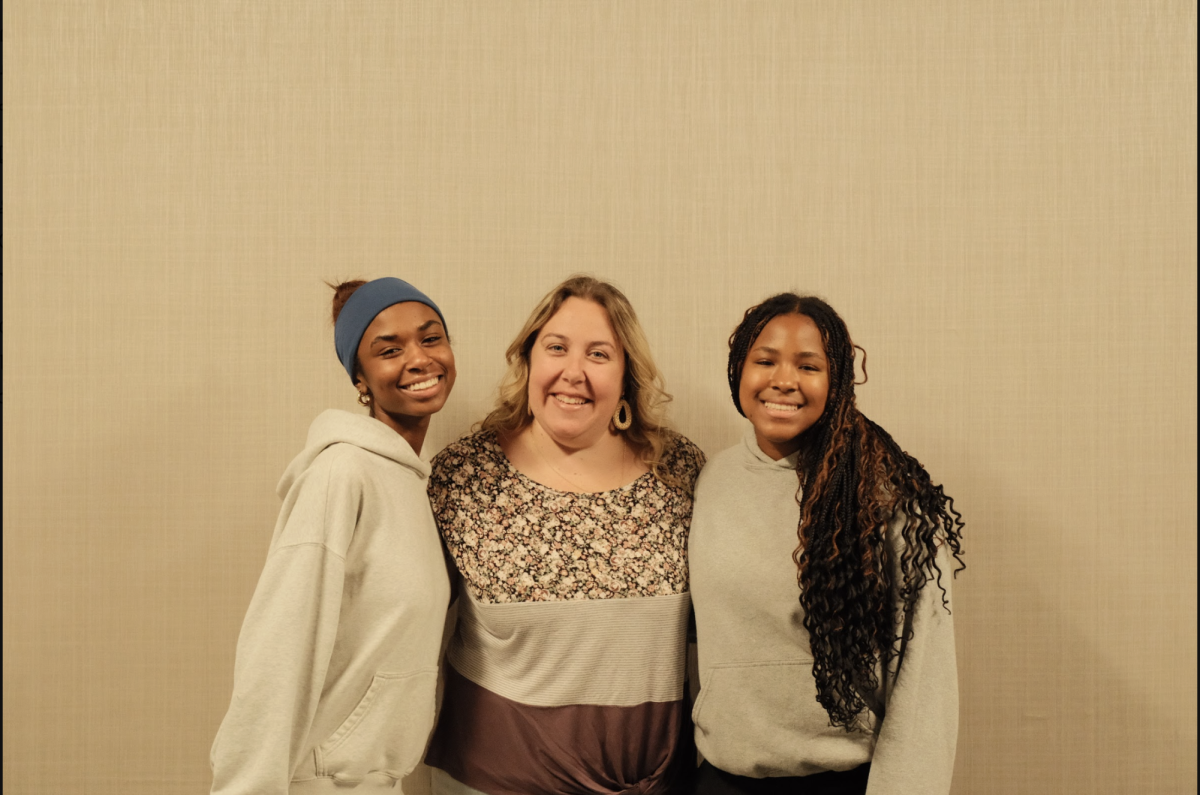
The idea to stock cabinets with free snacks was first developed by junior Nolan Krueger and his mother, Mollie Hertel, through their involvement in Oak Park and River Forest High School Mutual Aid, a local volunteer-led group. It has since grown into Students Feeding Students, a student-led initiative. The group currently has about 15 members, according to junior Rei Freireich, a member.
Their plan aims to provide consistent access to food during the school day without requiring anyone to ask for help, addressing both food insecurity and the stigma that can come with it. While the school currently offers a pantry and refrigerator in the counseling office, access depends on reaching out to an adult. The proposed cabinets aim to remove that barrier and provide a more immediate, accessible option.
“There’s a population of students experiencing hunger that falls under the radar, simply because they may not be speaking up,” said Lee Williams, executive director of equity and student success. “The cabinets serve the purpose of students not having to come to anybody to say they have a need.”
The group’s initial proposal outlined installing up to 16 cabinets in high-traffic but accessible areas of the building, stocked with items such as granola bars, fruit, jerky and baked chips. Organizers estimate each cabinet could hold around 250 snacks and be restocked three times per week, adding up to more than 1,000 items per restock cycle.
So far, the district has approved four cabinets, which were installed first as a trial before any expansion is considered. “Our original goal was 16 cabinets, but we had to compromise and start with four,” said Krueger. Two cabinets are located on the second floor, one cabinet is on the third floor near the middle hallway, and another cabinet on the fourth floor near the stairwell corridor.
The group hopes to expand the program in stages. In the fall, they hope to install four more cabinets and fill a refrigerator that the school owns but is currently not in use, according to Hertel.
The longer-term vision includes all 16 cabinets and eventually take-home meal options for families. “This is just the first phase,” Adams said.
The food and cabinets were funded by more than 75 private donations, and the group has raised more than $11,000 for the project so far, according to Hertel. Illinois Sen. Don Harmon and Beyond Hunger, a local nonprofit organization focused on addressing food insecurity, provided $2,000 worth of snacks through in-kind donations, she added.
Williams said the district wants to evaluate how the program works before adding to it.
Both organizers and administrators said the success of the program will depend on how it is used. “We want to learn a great deal about how students will respond to this project and our overall approach to addressing this student need,” Williams said.
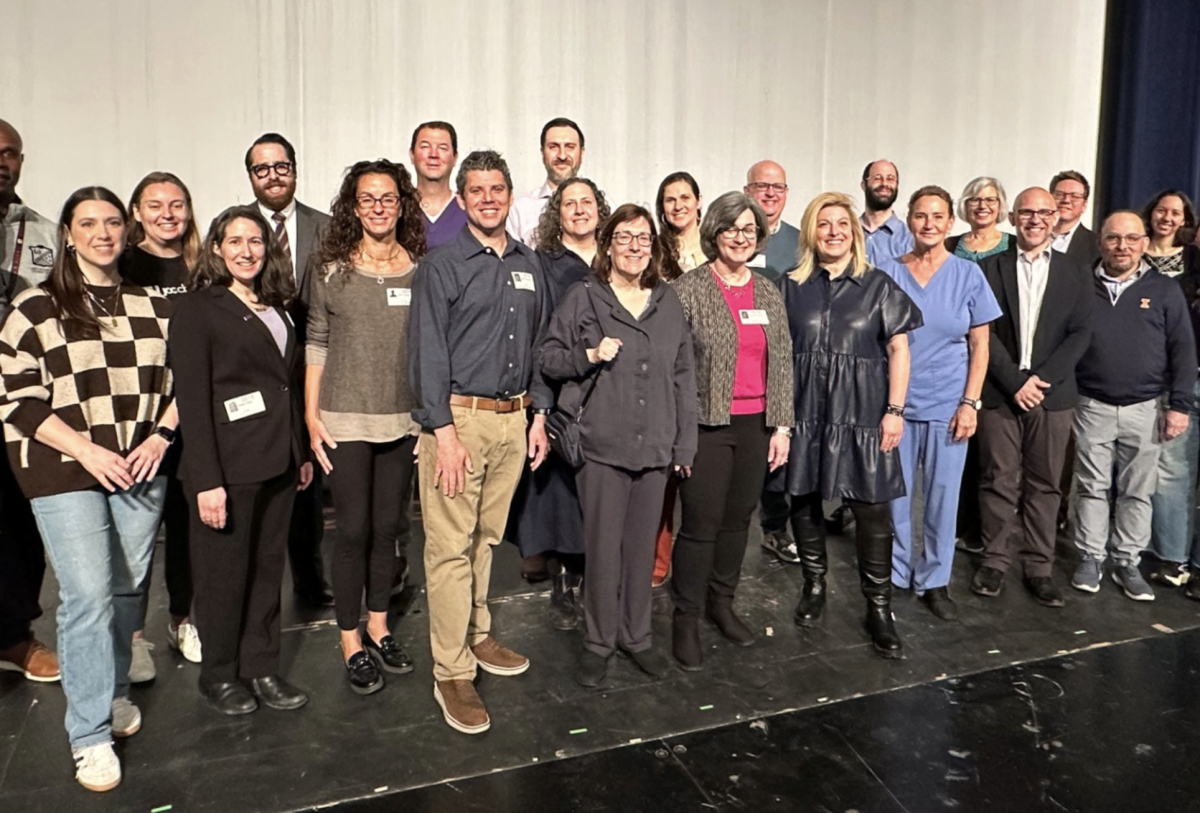
The group has worked with district leadership, staff members and community organizations to move the project forward. Beyond Hunger partnered with the student group and district leadership to help supply snacks for the cabinets. Brianne Kellogg, manager of nutrition education and benefits services at Beyond Hunger, said conversations about the project began in the fall before planning accelerated in March.
“We worked with the school administration and parent group to determine nutrition standards for the snacks that are in keeping with the school lunch program standards,” Kellogg said. “From there, we procured snacks that fit into these standards, were shelf-stable and would appeal to high school-aged students.”
Williams said the process has highlighted the persistence of those involved. “This project has shown me growth in the students’ ability to be persistent and to get things done,” he said. For those leading the proposal, success will ultimately be measured by whether the cabinets are used and whether they help those who need them.
“If people say it’s helping and the food is being used, then we’ve done what we set out to do,” Adams said. As the project moves forward, organizers say the goal is simple: to make sure no one has to go through the school day hungry.
—
Corrections: An earlier version of this story misstated the name of Nolan Krueger’s mother. She is Mollie Hertel, not Molly Krueger. In addition, Brianne Kellogg’s name was misspelled. Trapeze regrets the errors.