On Oct. 25, 1994, Susan Smith, a white woman from Union, South Carolina, drove to John D. Long Lake with her two kids, Michael and Alex, strapped into the back seat. She pushed the car into the lake, killing them. She then placed the blame for their disappearance on a Black man who did not exist.
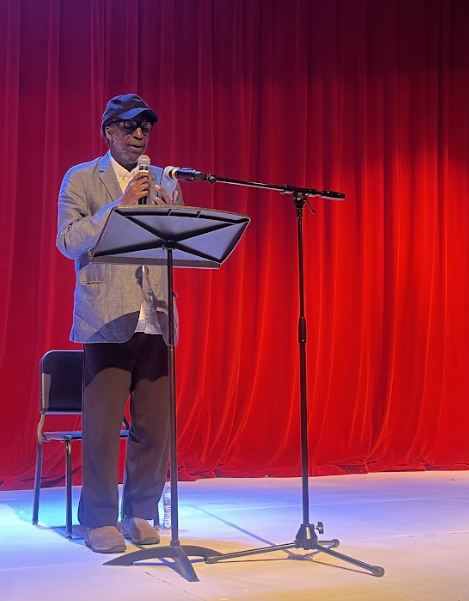
This true story inspired “Brutal Imagination,” a 2001 book of poetry and play by Cornelius Eady, who made news recently when he read a poem at New York City mayor Zohran Mamdani’s inauguration. Eady came to Oak Park and River Forest High School on April 15 and 16 for workshops, discussions and a professional staged reading of “Brutal Imagination.”
Eady has an extensive background as a poet, playwright and professor. He has written seven volumes of poetry and two librettos, “You Don’t Miss Your Water” and “Running Man,” which was a Pulitzer Prize finalist in 1999. He is also the co-founder with Toi Derricote of Cave Canem, a nonprofit that supports African American poets. He recently retired from the University of Tennessee, Knoxville, where he was an English professor and Chair of Excellence.
History teacher Tyrone Williams spearheaded the plan to stage a reading of Eady’s play “Brutal Imagination” at Oak Park and River Forest High School. For Williams, the play was a way to engage with both history and the ongoing challenges of the present. “I was really thinking about a way to have students think deeply about the enduring discrimination in our country,” he said. “And so, you know, I thought this play could be used as a vehicle, right? To have some deeper conversations that would take us beyond the boundaries of the classroom.”
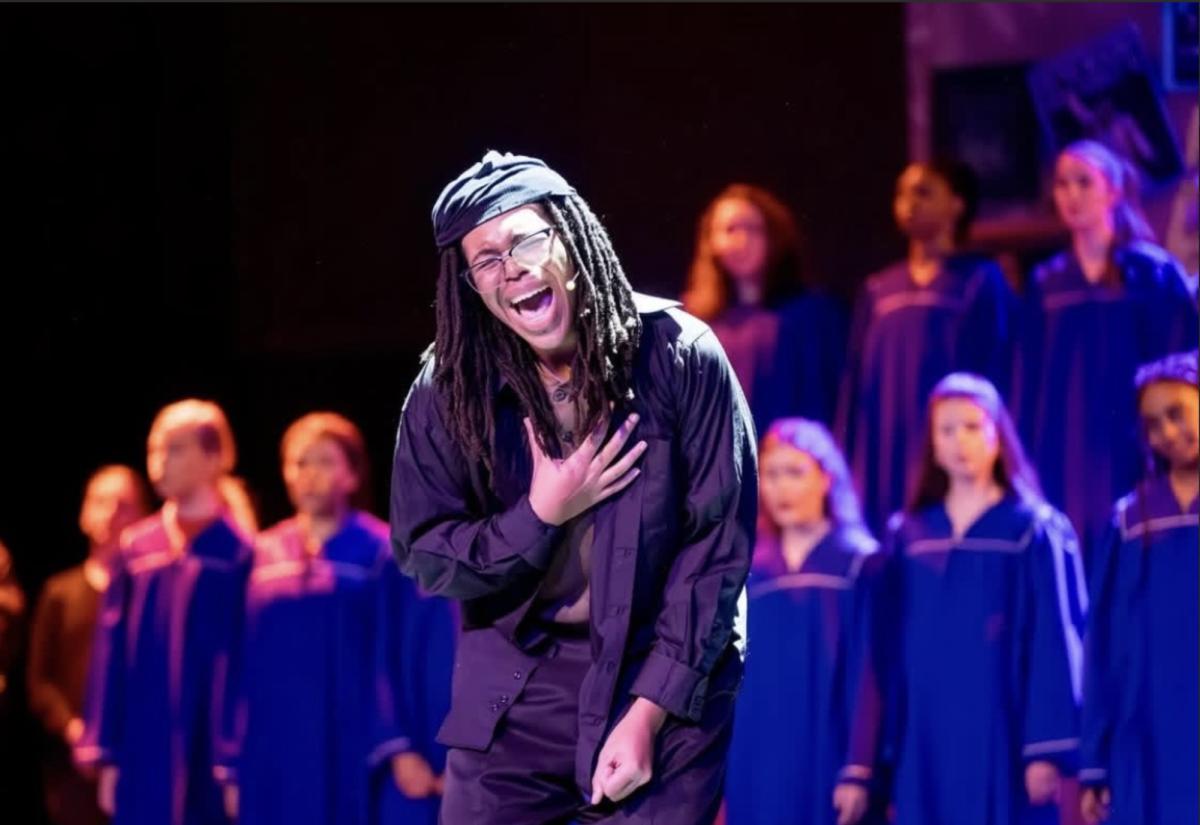
Along with Eady, several professional theater artists, an attorney and two exonerated prisoners visited OPRF for the project. The play reading was directed by Jennifer Garvey Blackwell and performed by noted stage, film and TV actors Eilis Cahill as Susan Smith and Joe Morton as the imaginary character Mr. Zero.
Adding a real-world dimension to the discussions about race and the criminal justice system were Charles Johnson and LaRod Styles, who spent 21 years in prison for a murder they did not commit. They attended the event at OPRF with their attorney, Terry Campbell of The Innocence Project, an organization that works to free people who have been wrongfully convicted.
Styles and Johnson, with their co-defendants Troshawn McCoy and Lashawn Ezel, were known as the “Marquette Four”. They were exonerated in 2017, and in 2024, they received a $50 million settlement from the city of Chicago.
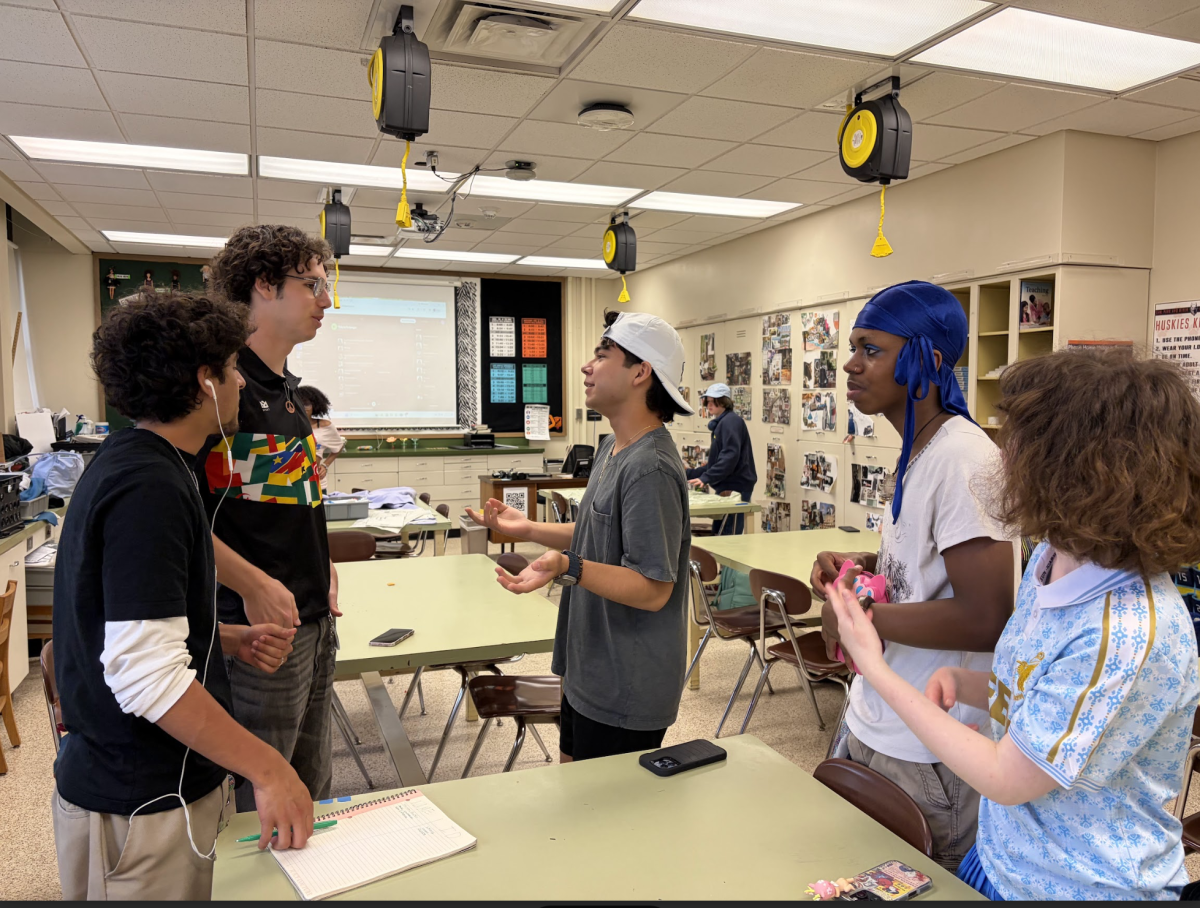
Williams partnered with OPRF history teachers Janelle Smithson and Octavius Bellamy to produce the event, he said. He also noted the important role of student organizers, including seniors George Barkijija and Hannah Jones, and juniors Marley Paxton and Lily Merrick, who worked for months to prepare.
During the April 15 workshops, students took part in discussions with Eady, Morton, Johson, Styles and Campbell to further their understanding of the inequality of the criminal justice system from firsthand experiences.
“It’s one thing to read a peer review article and then deconstruct it and then have a conversation about it, and it’s another thing to have students research an idea, come up with questions about that idea, and then have a direct engagement with people who were harmed by the criminal justice system,” Williams said.
The staged reading took place on April 16 in the Little Theater. The play is set up as a conversation between Smith and Mr. Zero, the imaginary character she blames for her children’s deaths. In the push-and-pull dynamic between the two, Mr Zero pulls Smith back to reality whenever she begins to think her plan will work. Her accusation turns into a nationwide manhunt that goes on for nine days until Smith confesses.
“I really liked the play,” said senior Siofra Pelletieri, following the performance. “It was cool to see how deep they could go with just two people.”
Johnson, who took part in the talk-back discussion after the performance, called it “a great play. A great play.”
The panel also included Eady, Morton, Cahill, Garvey-Blackwell, Johnson, Styles and Campbell. Barkijija asked, “What can art do in the pursuit of justice?”
Morton responded, “The justice system can get people out of prison. Art can’t do that,” He further said, “Art is there to open your heart, open your soul, open your consciousness, and the justice system can’t do that.”
Campbell gave advice to the audience. “Stand up when you see injustice. If you let it happen to someone else, sooner or later it’s going to happen to you or someone in your family.”
For senior Yvette Thrasher, the program had a powerful impact. “I felt like today, peers that were outside my race were able to listen and be respectful and relate to what was happening on stage, and even people of my race were able to see that this doesn’t only affect us,” she said. “This is an everybody situation.”