Is war an intrinsic characteristic of human nature or a result of human judgment?
This question has been a guiding principle in political theory for many years; however, its answer is still not obvious. The ongoing tensions between the US and Iran point to the lasting significance of a conflict theory that comes from 17th-century philosopher Thomas Hobbes. Hobbes’s perspective asserts that war emerges not solely from unsuccessful diplomacy, but from fear and an absence of authority.
Hobbes asserted that without a central authority to uphold order, humanity exists in a “state of nature,” marked by distrust and constant vulnerability. In this case, people do things to keep themselves secure since they know they can’t be sure they are safe. The Stanford Encyclopedia of Philosophy states that Hobbes called this condition a “war of every man against every man,” which means that humans carry a belief that violence is always possible regardless of any context of war at that time.
The same source says that fear, not simply violence, is what prompts these thought patterns. People have to protect themselves when there is no one in charge to do it for them. This usually involves being prepared for dangers before they happen. When people feel uncomfortable, it’s normal for them to be competitive, distrustful and power-hungry. This is what Hobbes describes as the natural state of nature between forces.
This idea is especially important when it comes to international affairs. Unlike societies within a country, the global system doesn’t have one authority that can enforce rules in all countries. So, states work in a way that is similar to Hobbes’s state of nature. This dynamic can lead to what is sometimes termed a “Hobbesian trap,” when actions taken to protect oneself are regarded as threats, which leads to cycles of escalation.
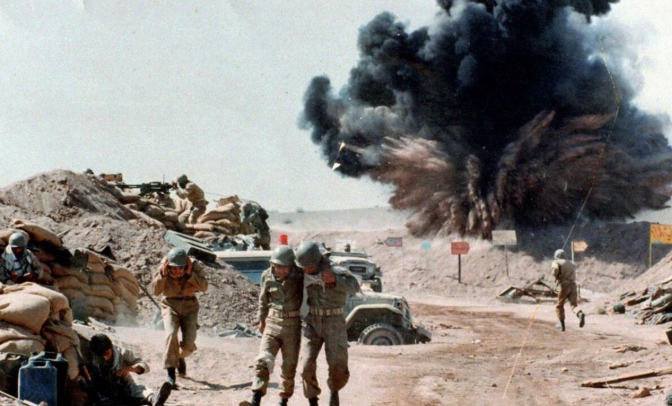
The current disagreement between the U.S., Israel and Iran is a fundamental example of how this theory functions. The war began in late February 2026 when U.S. and Israeli troops fired on Iran. Iran fired missiles and drones back, and the fighting has since extended throughout the region, making things even more unstable.
It’s not clear-cut or straightforward to govern the war.The Atlantic Council says it’s a “rapidly evolving and highly complex” situation with no clear resolution in sight.
If you look at this argument through a Hobbesian lens, it appears familiar. Each state watches out for its own safety since there is not one overarching power dictating all international forces. The US and Iran both use force when they feel threatened, but the other side interprets this as an attack. This creates a cycle of retaliation that is driven by both fear and wrath.
But Hobbes’s thesis doesn’t fully explain why they fought. Fear and uncertainty are clear; nonetheless, the war has been shaped by political decisions, historical conflicts and strategic goals. People who disagree with Hobbes claim that conflict isn’t always inescapable; it often happens because of choices made in certain political contexts. But this leaves a big question unanswered.
If Hobbes is correct, a world devoid of authority could result in violence as a natural consequence of perceived insecurity. If conflict is shaped by human decisions rather than exclusively by human nature, it may be preventable. It’s not only a philosophical question; it makes people think differently about conflict and whether it can ever be avoided.