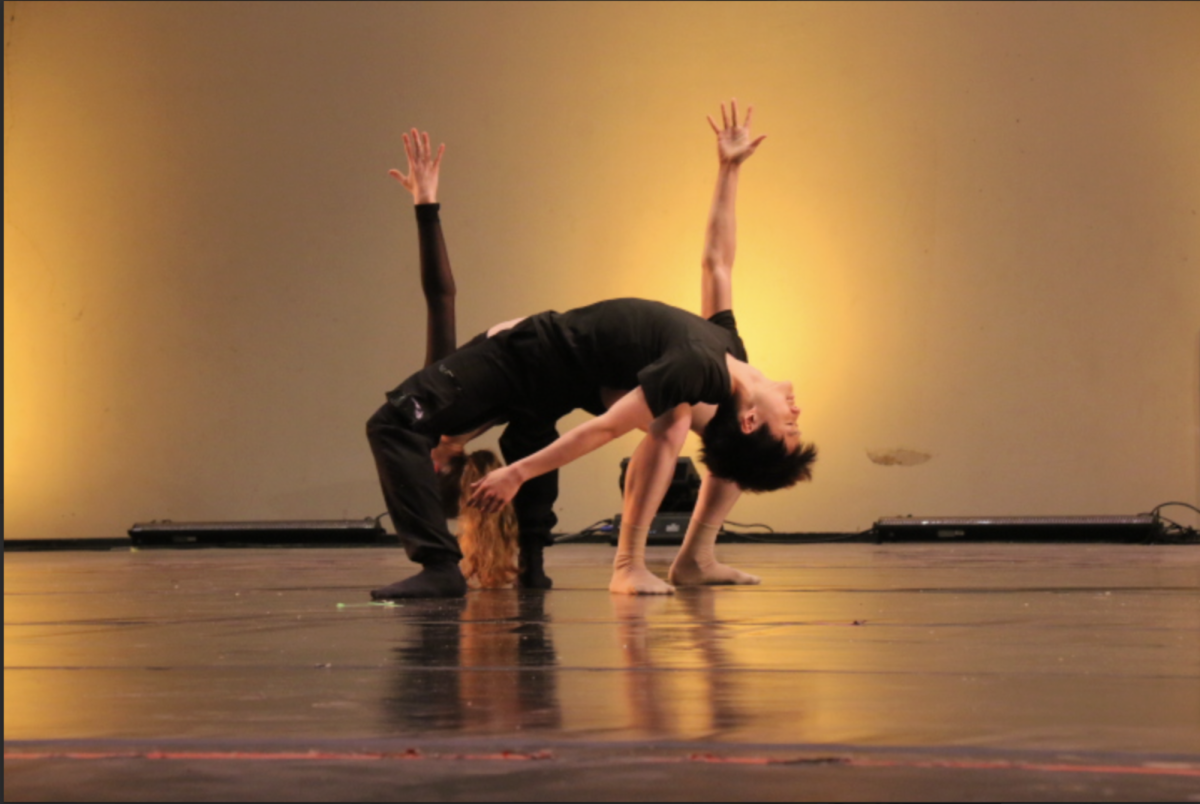
Oak Park and River Forest High School’s Orchesis Dance Company showcased student- and faculty-choreographed dances this past April 10, 11 and 12, presenting a variety of dance styles including jazz, contemporary, ballet and more. Orchesis rehearses in tight time increments from September to October and February to April before performing for three consecutive days. Director Betina Dunson-Johnson and Assistant Director Jennifer Kanwischer prioritize student creativity in the company. Although they serve as the chief heads of Orchesis, the students are the ones that arrange the pieces.
“Ms. DJ and Ms. K have created an environment where the dancers aren’t afraid to take creative authority…I’ve never been able to truly create dance without any boundaries like I have in Orchesis,” said experienced choreographer Gwen Dannenberg, a fourth-year senior member of the company.
A majority of Orchesis dancers train outside of the company with various dance studios. A key unique factor of Orchesis that distinguishes it from traditional youth dance opportunities is emphasis on student choreography. Allowing members to take creative authority is how Dunson-Johnson and Kanwischer turn young, learning dancers into independent choreographers, many of whom have taken the skills learned in Orchesis beyond high school graduation.
Leah Scholvin and Ellie Endres, who graduated last year, are pursuing BFAs in dance at the University of Madison-Wisconsin and the University of North Carolina School of the Arts.
“The way DJ encourages all of her students to get out of their comfort zones and problem solve as choreographers and dancers builds such valuable experience for any career in the dance field, but especially choreography,” said Scholvin. “I can confidently say that if it hadn’t been for Orchesis and Ms DJ, I would not be studying dance professionally now.”
Endres agreed. “I never thought of myself as good enough to dance in a college program,” she said. “However, being a part of such a welcoming community inspired me to push myself past what I thought I could do. I would truly not be where I am now if I had not stepped out of my comfort zone to audition for Orchesis.”
As a third-year company member who will continue to dance in college, I believe that the number one most important factor of the company, especially currently, is how it changes participants’ perspectives on what dance is most valuable for. Over the past decade, collegiate dance has exploded in popularity as national competitions have gained mainstream attention online.
Viral teams, like programs at the University of Minnesota and The Ohio State University, are pulling in viewers and expanding the audience beyond just dancers.
This rise in popularity contributes to a coinciding limitation of creativity. Dance teams often aim to impress judges, not just create. There’s a push toward technical difficulty and precision over originality. Successful styles often get repeated in competition because they’re proven to score well.
Competitive styles are useful and impressive because they demand precision, stamina, and consistency. However, to maintain dance as an art alongside being a sport, exploratory dance that emphasizes personal expression, innovation and artistic risk-taking needs to be maintained. Dance can be maintained as an art in creative spaces like Orchesis, where the rigidity of more current or popular dance styles dissolves.
“Orchesis helped me learn to approach dance and life in general in a calmer way,” said Brummel “I used to get so worked up about being perfect in dance and in life that I would get so upset with myself anytime I made a mistake, even though they happen to everyone.”
She added, “Orchesis taught me that there’s so much more beauty in art that isn’t perfect than something that is flawless.”