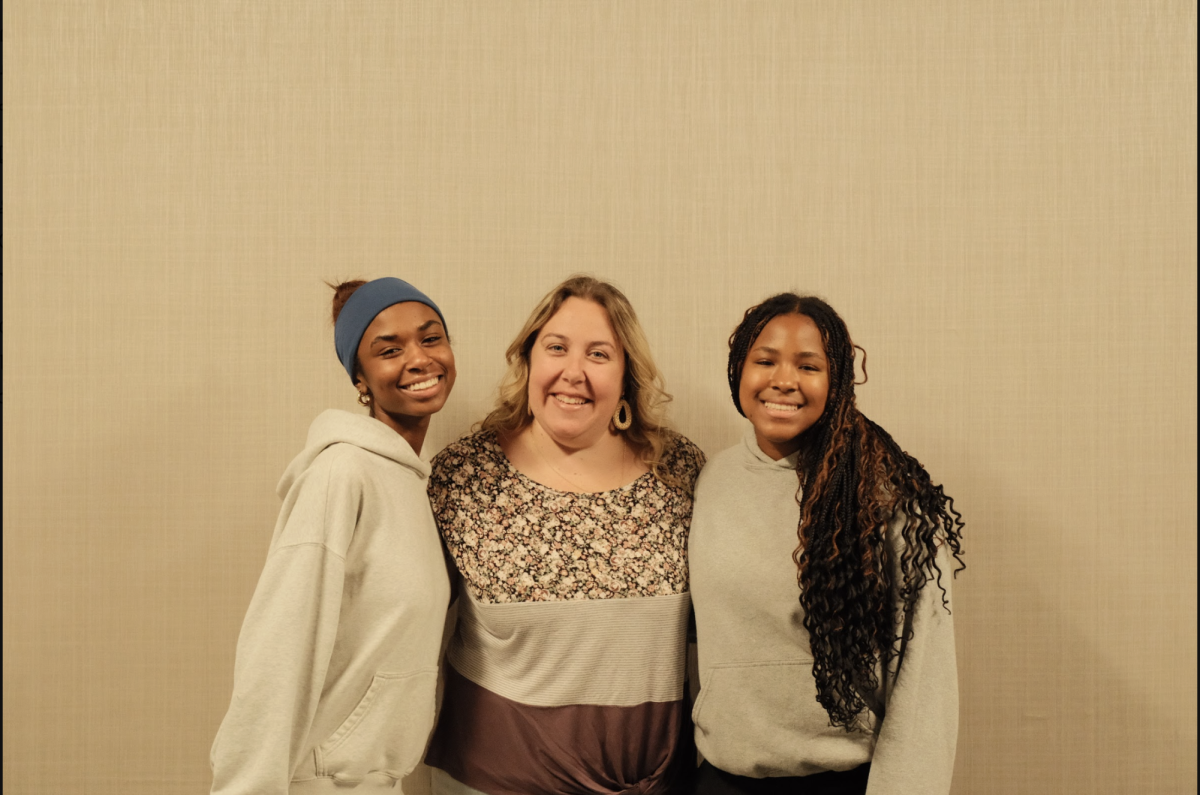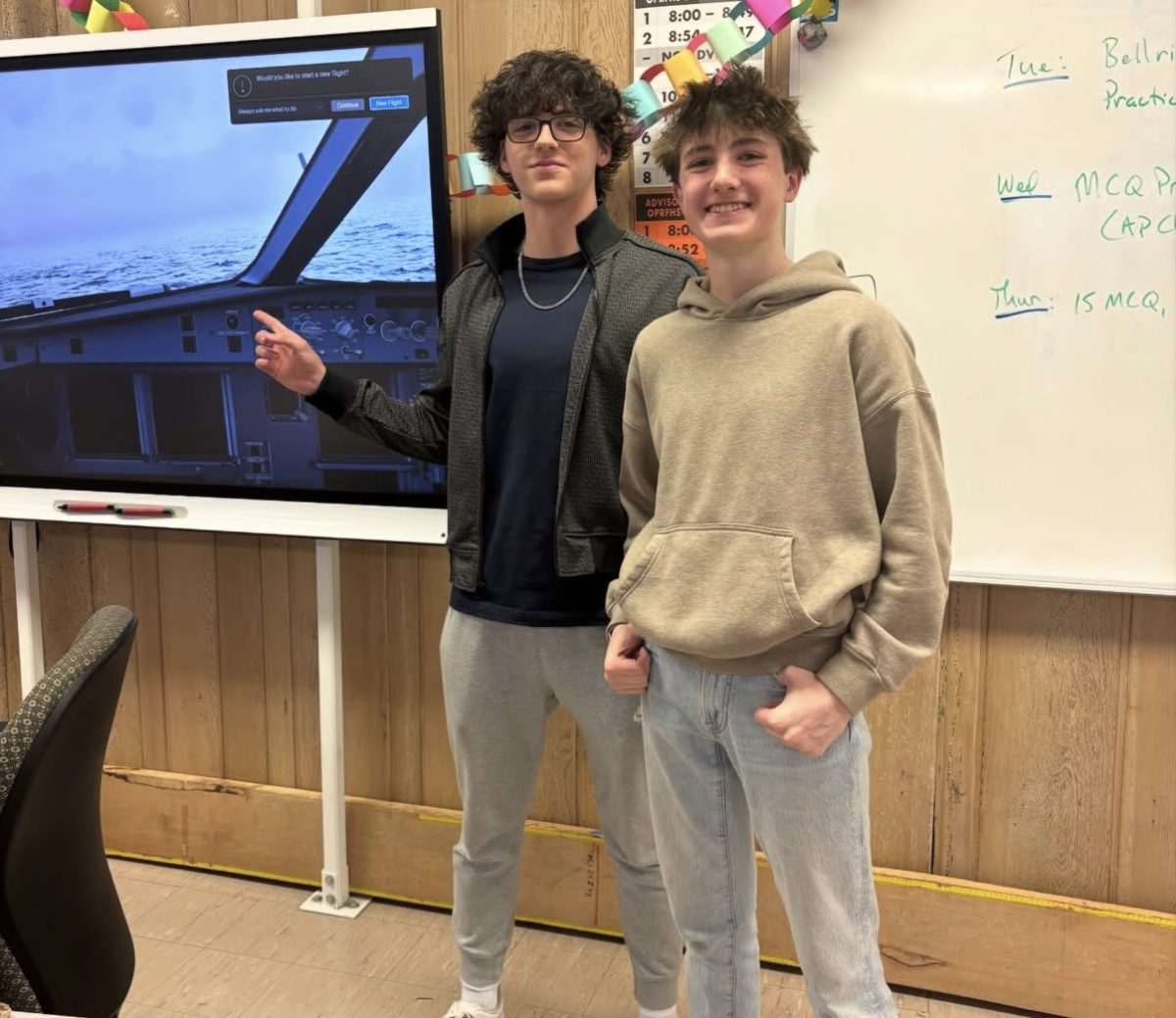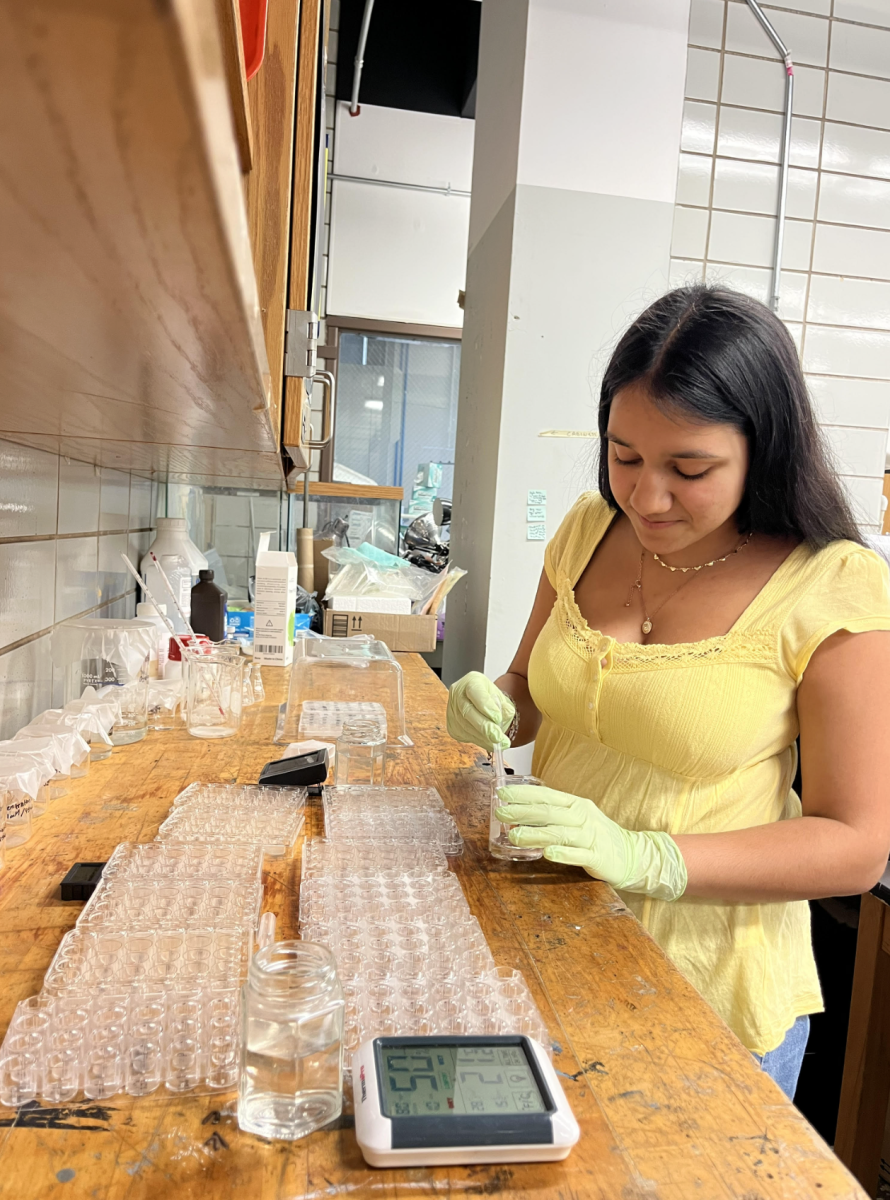
AP Research is a year-long course where students design and carry out an original study on a topic of their own choosing, write an academic paper and defend their findings to a panel of judges. At Oak Park and River Forest High School, juniors Keaton Roberts, Kunmi Osikanlu and Gayatri Gadhvi are midway through that process, working on projects that started with questions they came up with on their own.
Roberts’ research focuses on gut health and obesity treatment. Watching GLP-1 drugs like Ozempic become increasingly common in recent years, including among people close to him, pushed him toward asking whether a cheaper, lower-risk alternative might exist.
“I’ve seen how prevalent GLP-1 drugs have become, which have even been used by one of my own family members,” he said, “so I wanted to find an alternative that was less costly and would have fewer side effects.” His study examines whether a combination of probiotics and prebiotics can alter fat levels in Caenorhabditis elegans, a microscopic worm used widely in biological research, with the long-term goal of understanding whether that kind of intervention could apply to humans.
Osikanlu’s project is rooted in concern over pollinator decline. His study tested whether humic acid, a naturally occurring soil compound, could protect fruit flies from microbial damage caused by imidacloprid, a pesticide linked to declining bee populations.
Sorting out how to measure what was happening inside the flies was the hardest part. “I worked through this by sticking to my protocol and using different data analysis tools to manage error,” he said. He sees the work as a first step and would push further into the chemical changes happening inside the flies if given more time.
Gadhvi’s research takes on spinal cord injuries, one of medicine’s most persistent challenges. Her study examined how inosine, a compound known to promote the regrowth of damaged nerve fibers, affects regeneration at different concentrations in planarians, a type of flatworm used to model neuronal injury. Experimenting was demanding. Her immunofluorescence assay required her to come in before school every morning, stay through multiple class periods and bring materials home on weekends. “Although it was a lot of work, it was so much fun,” she said. Her results showed that inosine had a dose-dependent effect on regeneration, a finding she would build on by testing more concentrations and eventually moving into vertebrate models to more closely replicate human biology.
What all three projects share is that they started with something the students genuinely wanted to understand. AP Research does not assign a topic or a hypothesis. Students identify the question, build the study and deal with whatever complications come up along the way. For Roberts, Osikanlu and Gadhvi, that has meant confronting the real constraints of doing original research, including unexpected results and methods that had to be adapted.
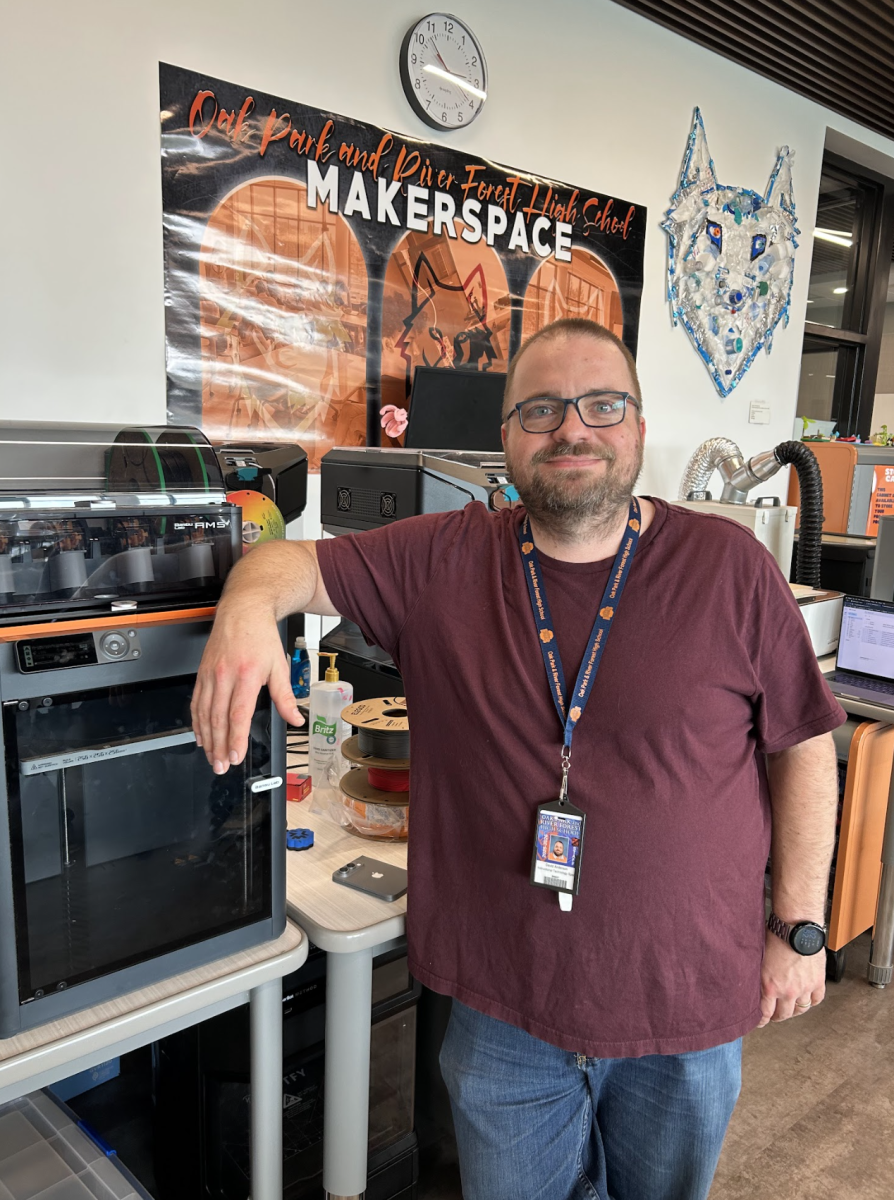
Matthew Kirkpatrick, who teaches the course at OPRF, has watched many students go through that process. “A really large percentage of them look back at it as one of the most worthwhile or meaningful things they have done,” he said. The projects coming out of his class this year suggest why. The questions Roberts, Osikanlu and Gadhvi are asking are ones that researchers in their fields are asking too.