Earlier this year, junior Peter DeBush decided to turn his longtime interest in aviation into something other students could enjoy by creating Oak Park and River Forest High School’s Aviation Club.
But why would someone put all that time into starting an airplane club from scratch? For DeBush, airplanes have always been an interest.
“I feel like I just always have been interested in them pretty much all my life,” DeBush said. “I have a lot of people in my life who are airline pilots, so I think that kind of had an influence on me.”
One of the biggest influences was his cousin, who flies for Southwest. “He’d always tell me about his job,” DeBush said. “Really early on, I was like, this is something I want to do as well.”
That interest slowly became more serious. DeBush started flight school and recently completed his pilot check ride. But instead of just keeping aviation as his own thing, he wanted other students to have a place to explore it, too.
“I didn’t really have a club to join,” he said. “Someone asked me one time, ‘Why don’t you just start an aviation club? And I was like, huh, OK.'”
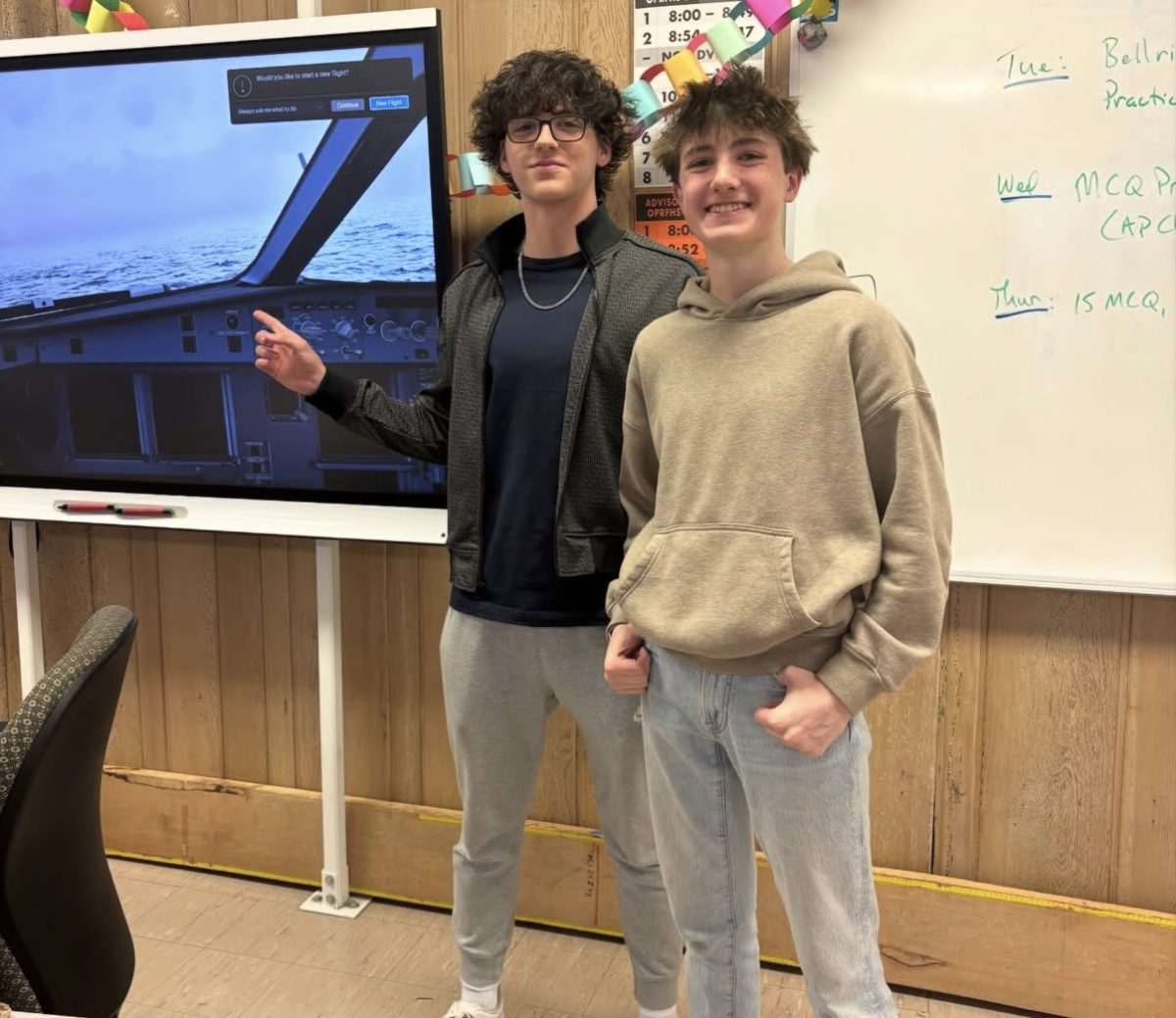
That “huh OK” eventually became one of the more unique clubs at OPRF. Meeting usually include presentations about aviation topics, guest speakers, discussions and DeBush’s personal flight simulator, which he brings from home so students can try it themselves.
And according to club sponsor Thomas Kennedy, that part gets interesting fast.
“You actually get to try to fly planes,” Kennedy said, “which means also, for many of these kids, crashing planes.”
The simulator has turned out to be a fun diversion, DeBush said. “It was just kind of tucked away in a closet somewhere,” he said. “I thought it was a good way to people engaged at the meetings.”
The club started strong, too. According to Kennedy, one of the first meetings brought in between 40 to 50 students. Why are so many people interested? Maybe it’s because aviation is something students do not usually get to experience at school. Or maybe free doughnuts helped a little, too.
“It’s a great club if youn like free food,” Kennedy joked.
Still, both DeBush and Kennedy kept coming back to the same thing: the club is less about planes and more about the people there. DeBush repeatedly mentioned how much help he gets from other student leaders like juniors Elena Snydacker and Elliot King.
“Aviation club has an incredibly welcoming atmosphere,” King said. “I really enjoy it because I get to meet and interact with other people who share my interests in aviation while learning about many aspects of aviation and the aviation industry in fun ways.”
“It really takes a village,” DeBush said. “I couldn’t have done it without them and Mr. Kennedy.”
He also pointed out that the members themselves are what make the meeting work. “The people who show up and have stuff to say and are contributing to the meetings,” DeBush said. “That’s a big part of it.”
Kennedy especially noticed the way DeBush interacts with younger students. “He’s very patient with the younger kids in the club,” he said. “It’s great to see that mentorship he brings to the table.”
One of the club’s biggest meetings featured an actual airline pilot speaking to students about the industry and what the job is really like. DeBush said that the meeting probably had the best turnout all year.
“It’s one thing to talk about life as an airline pilot,” DeBush said, “and then it’s another thing to have an airline pilot come in and share his personal experience.”
For DeBush, the club also became a way for students to find people with similar interests, especially students who may not have found their place yet.
“If there’s an interest you share with other people,” DeBush said, “I’d say just go for it.”
And honestly, that idea might explain why the Aviation Club worked in the first place. It was never really just about planes. It was about creating a space where students could show up, ask questions, meet people, eat snacks, and maybe crash a simulated airplane into an ocean without getting in trouble for it.