For a generation of children in the Asian diaspora, after-school care wasn’t a playground or a structured program. Instead, it was a red vinyl booth at the back of a family restaurant. While their peers might have been enrolled in enrichment programs, such “restaurant kids” were doing homework to the rhythm of a sizzling wok and scent of industrial floor cleaner.
Documentary photographer Hannah Yoon has spent years capturing this lived reality, turning a lens on the children who grow up in the accidental daycares of small businesses.To the casual diner, it’s a charming immigrant success story. But not everyone agrees. New York is moving toward providing free, full-day, high-quality early childhood education under a plan sponsored by New York Gov. Kathy Hochul and New York City Mayor Zohran Mamdani. As this plan develops, we must stop romanticizing this upbringing and start calling it what it is: a visible symptom of a childcare system that is both economically and culturally out of reach.
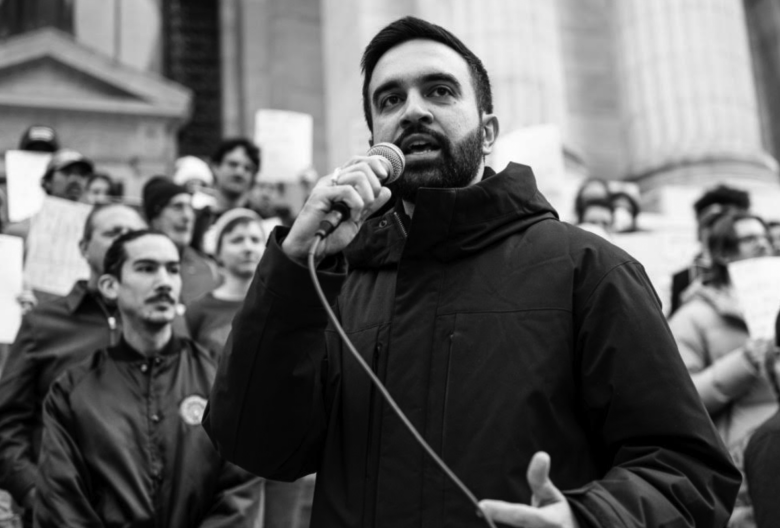
Officially known as the 2-Care initiative, the Mamdani-Hochul plan aims to provide universal child care. Launched in early 2026, the plan provides entirely free child care for 2-year-olds in New York City, starting with 2,000 toddlers in high-need areas and expanding to a citywide entitlement by 2029. Backed by approximately $1.7 billion in new state and city funding, the initiative also supports the existing “3-K” pre-K program for 3-year-olds and aims for universal statewide pre-K for 4-year-olds by 2028.
To truly understand the value of the Mamdani-Hochul plan, it must be compared to the cost of high-quality early education as a major household expense. At Hephzibah Children’s Association in Oak Park, after-school care can reach roughly $519 per month for families with higher annual incomes. Private institutions like Oak Leaf Academy list full-time toddler care at approximately $2,299 per month, and other local providers can range higher depending on age.
While some institutions like Wonder Works Children’s Museum offer discounted admission for families with WIC/EBT cards to ensure accessibility to play, true childcare costs remain out of reach for many families. By eliminating these fees for 2- and 3-year-olds, the Mamdani-Hochul plan aims to replace this patchwork of high costs with a guaranteed public service, ensuring that income level no longer dictates families’ access to essential early childhood development.
For Jolene Heinemann, an English teacher at OPRF, the decision to work part-time through a job share was driven by both a desire for more time with her infant and the sheer financial reality that she and her husband experience. “My husband and I are both teachers, and we don’t make enough to seriously entertain that idea if we have another option,” she said.
With monthly costs for full-time child care in Oak Park peaking at approximately $2,768, rivaling or exceeding many mortgage payments, families often rely on a patchwork of support. In Heinemann’s case, this involves a relay where grandparents fill the gap. While Heinemann recognized the cognitive and language development benefits of starting childcare at 18 months, the high cost remains a barrier. By providing free childcare as a public entitlement, the New York plan eliminates this reliance on luck and family proximity, ensuring educators and other working parents can afford to stay in the workforce while accessing the developmental benefits they value.
For students, the New York plan isn’t simply a policy for toddlers, it’s a blueprint that could reshape their trajectory into adulthood. By establishing childcare as a public right rather than a private expense, the plan aims to eliminate the penalty that can force professionals to sideline their careers. This policy offers today’s students the chance to choose a career based on their passions, ensuring that for the next generation, early childhood is spent in a dedicated classroom of their own rather than in the red vinyl booth of an accidental daycare.