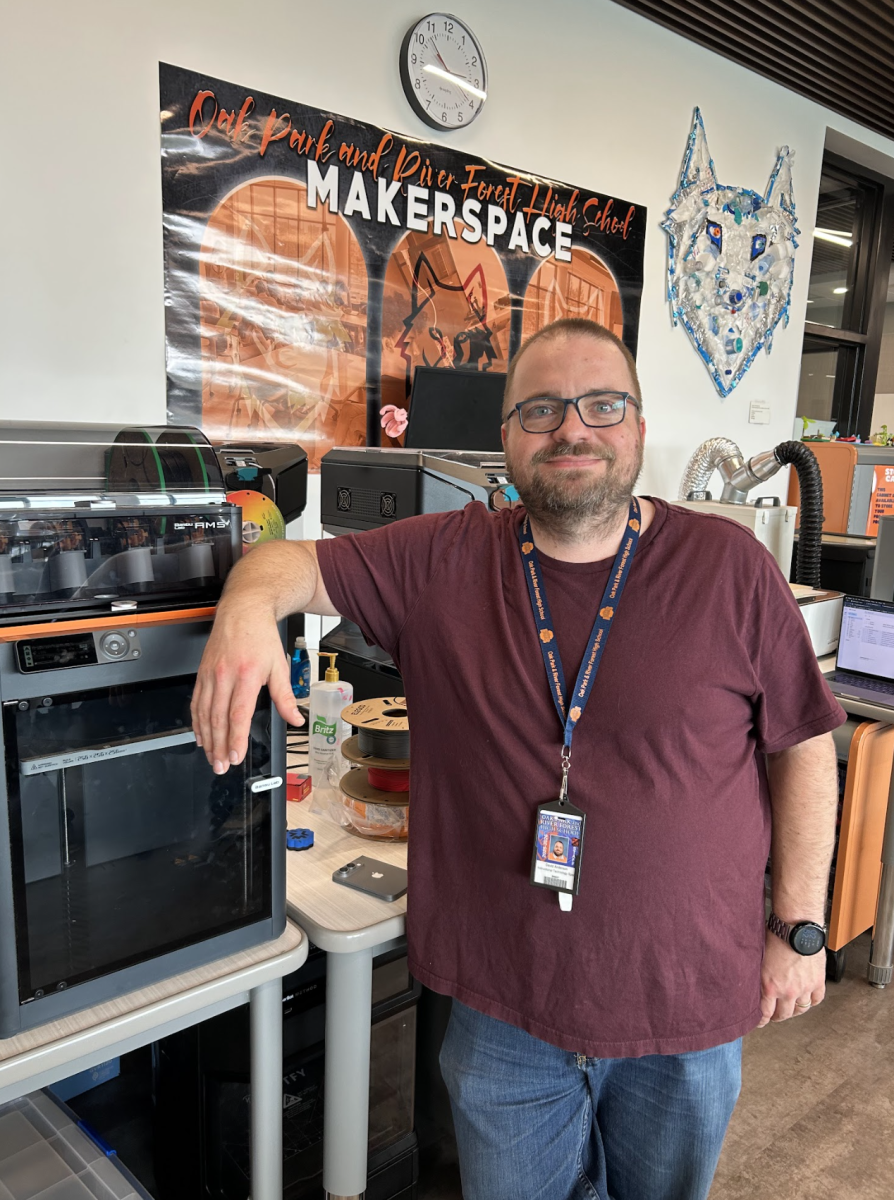
Teacher Assistant Sharelle Fletcher works each day with a student in a wheelchair as her one-to-one aide. Although they mainly stay on the first floor, they have gym class on the second floor twice a week and class in the pool each Friday. Fletcher’s student is not fully wheelchair bound, as she can walk around with the help of an assistant and a gait belt. When elevators are down, it makes for a challenging route to class, so they have to find ways around it or wait for maintenance.
“So when that happens, usually we try to test our limits, see how far she can go,” Fletcher said.
The American Disabilities Act (ADA) ensures that individuals with disabilities have access to public spaces. Under the law, high schools are required to provide equal access to education and facilities for students with disabilities. Two of the most important requirements include wheelchair-accessible entrances that range from 32 inches to 36 inches wide and accessible restrooms.
Oak Park and River Forest High School’s Special Education (SPED) Department works to ensure that every student has an equal opportunity to receive an education. Executive Director of Special Education Andrea Neuman reflects on the current state of accessibility at OPRF.
“We’re definitely moving in the right direction,” Neuman said. “I think people are having conversations about accessibility, which is really good, right?”
On average, five to seven students at OPRF use wheelchairs, according to the 2025 Illinois Report Card for District 200, it notes that 6.3% of students have a disability, and 10.8% have an IEP (Individualized Education Program).
The school also offers a wide variety of programs designed to support students with disabilities. For example, the Best Buddies club provides all students the opportunity for friendship without judgment. “Best Buddies is amazing because it includes all our students,” Fletcher said. “They get to communicate, they get to do things like adventure night, karaoke and Special Olympics.”
OPRF also aims to make its learning spaces inclusive. The building is significantly accessible, with the exception of some bathrooms, doorways without automated opening mechanisms and the English classrooms on the 4th floor that require a small set of stairs to reach, according to Neuman.
OPRF is now in the process of upgrading its athletic facilities, which will mean easier access to a pool for students with disabilities. OPRF used to have two pools, built in 1928. Now, as construction moves forward on the new athletic wing, only the West Pool remains.
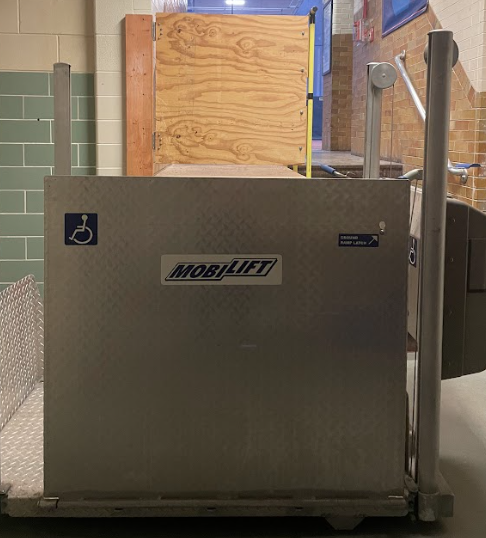
Located in the Fieldhouse, the West Pool has a chair lift that allows students with physical disabilities to participate in class. Getting to the chair lift means following an elaborate route not designed for wheelchair users. Likewise, this chair’s outdated technology quite often results in it getting stalled due to the short battery, requiring a separate battery to jumpstart the chair, according to OPRF Buildings and Grounds Manager Curtis Alsip.
Construction on the new athletic wing is set to be completed this summer. It includes a new 25-by-40-yard pool with multiple in-pool chair lifts and accessible features such as wide doorways and an elevator. This athletic space “was built with ADA guidelines in mind. Everything is level,” said Alsip.
Considering OPRF’s old age, new construction can be difficult. Nevertheless, each addition to the school enhances its accessibility. “I wouldn’t call it fantastic yet, but we’re working towards that,” Alsip said.
As OPRF works to upgrade facilities, students and staff navigate the building as best they can.
Overuse and overcrowding of school elevators is an issue. Although they are open to everyone, a pass is required to use them. Sometimes students use the elevator without a pass or those with passes abuse their buddy privileges and bring additional students to ride up with them. Neuman notes the importance of understanding that the elevators are for those who need them.
“We do have people who truly need the elevator to access their education,” Neuman said.
Navigating hallways is also a challenge. To ensure everyone gets to class on time, students with disabilities tend to leave class early to beat the hallway rush. Unfortunately, timing doesn’t always align quite right, sometimes leaving students and teachers assistants weaving through crowds.
“It just seems like everyone’s so in a rush that they forget we have people who are special needs in wheelchairs, and we need a clearance,” Fletcher said. “We need to get to our class just as much as you need to get to yours.”